
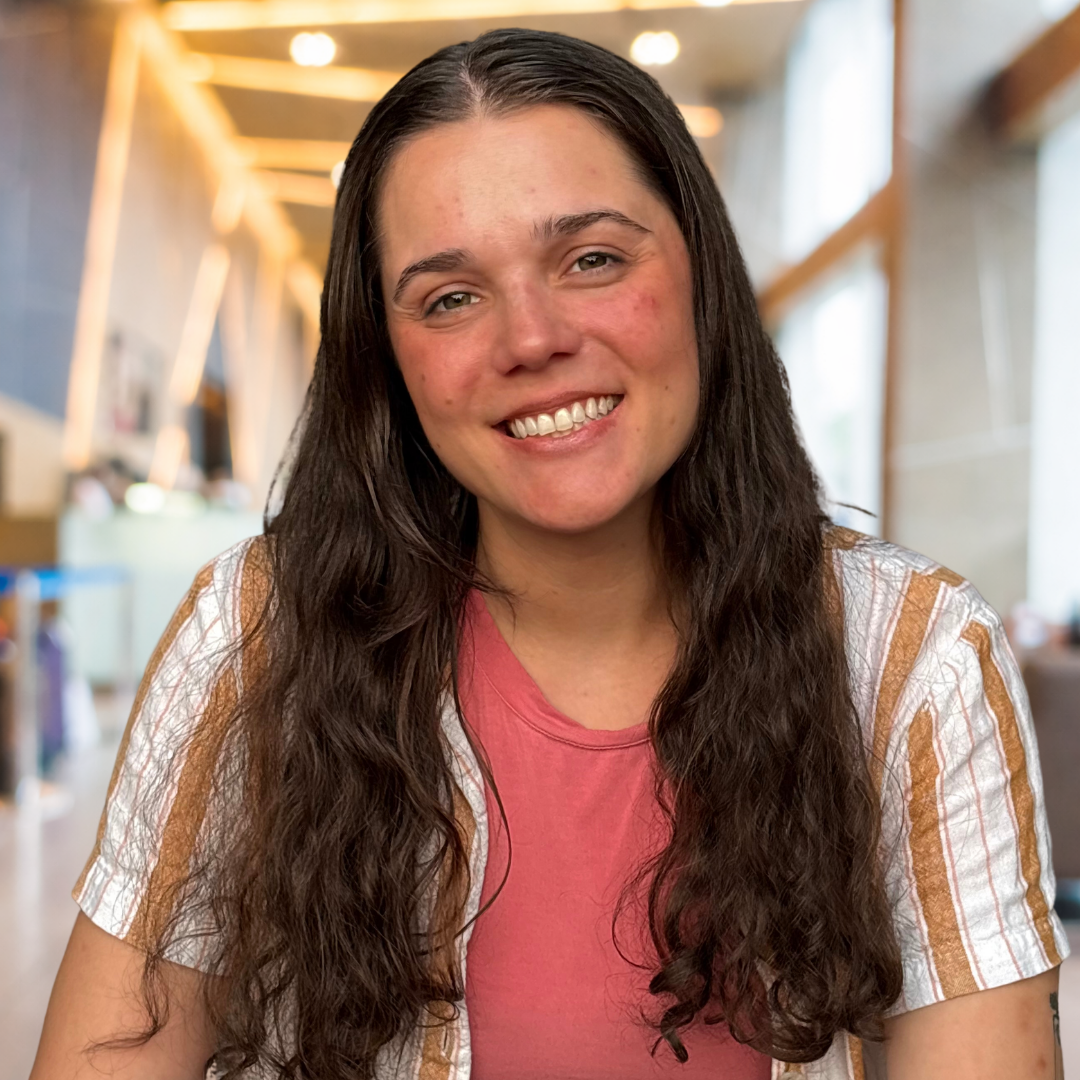
Hanna Salas, BA
MHC Intern
Pronouns: She/her/hers
Accepting new clients
Sliding Scale Available • Telehealth & In-Person
Adult Individuals, Couples, Families,
Children & Adolescents (6+), LGBTQIA+, Seniors
Philosophy of Care
My path into this work has been shaped by years of walking alongside people in community and ministry settings, where I spent nearly twenty years mentoring youth, leading small groups, and supporting individuals through life's challenges. In those spaces, I came to believe something that continues to guide my work today: people are not meant to go through life alone, and healing happens in relational connection.
My goal is to help guide people toward a deeper connection within themselves first, and from there, to be able to connect and thrive in their relationships with others. My clinical approach is integrative, rooted in psychodynamic relational therapy, CBT, and trauma-informed care, with a deep commitment to diversity, inclusion and anti-racism work.
I am an affirming therapist for LGBTQIA+ individuals, and I strive to create a space where all parts of a person's identity are welcomed, respected, and safe. I am especially passionate about working with anxiety, shame and those navigating the nuanced experience of religious trauma.
I aim to create a space where clients can process the harm they have endured without having to abandon the parts of their spiritual identity that still feel meaningful or alive. Together, we can explore what has been lost, what remains important, and what it might look like to reclaim faith or spirituality on their own terms. My style is warm, attuned, and collaborative. I draw from insight-oriented, somatic, as well as skills-based approaches. My hope is that through this work, we can begin to gather the scattered pieces of their story and create space for curiosity, compassion, and deeper understanding to come alive.
Education
Masters in Counseling Psychology (MACP), The Seattle School of Theology & Psychology, June 2027
Bachelor of Arts (BA) in Ministry and Leadership, Life Pacific University, June 2017
Specialties
ADHD
Depression
Parenting
Peer Relationships
Pregnancy, Prenatal, Postpartum
Racial Identity
Relationship Issues
School Issues
Shame and guilt
Religious Trauma
Mental Disorders
Dissociative Disorders
Mood Disorders
Personality Disorders
Treatments
Cognitive Behavioral (CBT)
Culturally Sensitive
Experiential Therapy
Integrative
Internal Family Systems (IFS)
Mindfulness-Based (MBCT)
Motivational Interviewing
Psychodynamic Relational Therapy
Somatic Therapy
Clientele:
Adult Individuals
Couples
Families
Children & Adolescents ( 6+)
LGBTQIA+
Seniors

Ready to Begin Your Journey?
Ready to Begin Your Journey?
Healing and clarity are possible -and it starts with one step.
2700 Richards Road
Suite 202
Bellevue, WA 98005


Generalized Anxiety Disorder (GAD)
GAD affects 6.8 million adults, or 3.1% of the U.S. population, yet only 43.2% are receiving treatment.
Women are twice as likely to be affected as men.
GAD often co-occurs with major depression.
Panic Disorder(PD)
PD affects 6 million adults, or 2.7% of the U.S. population.
Women are twice as likely to be affected as men.
Social Anxiety Disorder (SAD)
SAD affects 15 million adults, or 6.8% of the U.S. population.
SAD is equally common among men and women and typically begins around age 13.
According to a 2007 ADAA survey, 36% of people with social anxiety disorder report experiencing symptoms for 10 or more years before seeking help.
Specific Phobias
Specific phobias affect 19 million adults, or 8.7% of the U.S. population.
Women are twice as likely to be affected as men.
Symptoms typically begin in childhood; the average age-of-onset is 7 years old.
Treatment For Anxiety
Psychotherapy or “talk therapy” can help people with anxiety disorders. To be effective, psychotherapy must be directed at the person’s specific anxieties and tailored to his or her needs.